
About LHON


What is LHON?
Leber hereditary optic neuropathy (LHON) is an inherited condition that results in rapid central vision loss.1,2
Symptoms in LHON usually begin with sudden, painless blurring and clouding of central vision in one eye and then both eyes.3 It results from cell dysfunction in the optic nerve that relays visual signals from the eye to the brain.3 It affects how patients can see things.3 Each eye gets worse as the blurry blind spot rapidly expands over 6 to 12 months.3,4 The duration in which the eyesight gets worse varies from a few months to more than 2 years.3,4
Symptoms
LHON begins with the following symptoms3-6
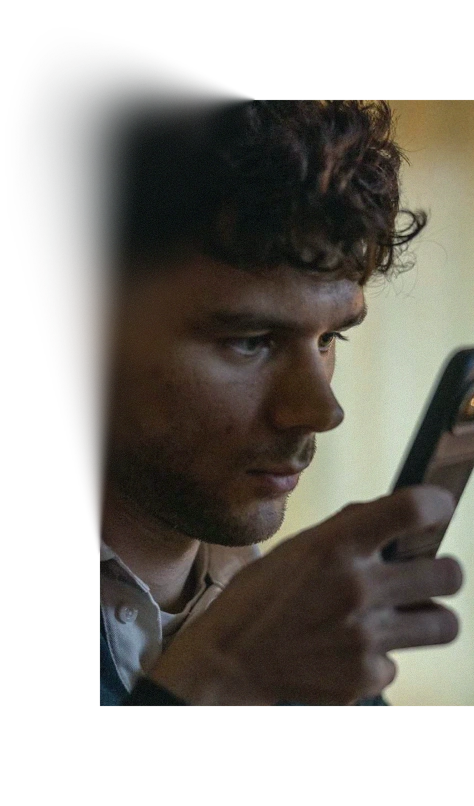

 Sebastian, Living with LHON
How LHON impacts vision


the only symptom of LHON.
Demographics
Men are three times more likely to be affected by LHON than women.5 The first signs of vision loss usually appear between the ages of 15 and 35 years.8 In rare cases, however, symptoms can occur between 2 and 87 years of age.8 The age of onset tends to be higher in women; LHON shows a marked bias of vision loss in menopausal women.5
Even if LHON runs in your family, one can’t predict the age at which it might trigger, who would be affected (men or women), or the severity of the vision loss.4,5Knowing the symptoms of LHON can speed up the diagnosis journey
LHON vision loss can occur at any age in men and women.
In men
In women
Role of genetics and inheritance
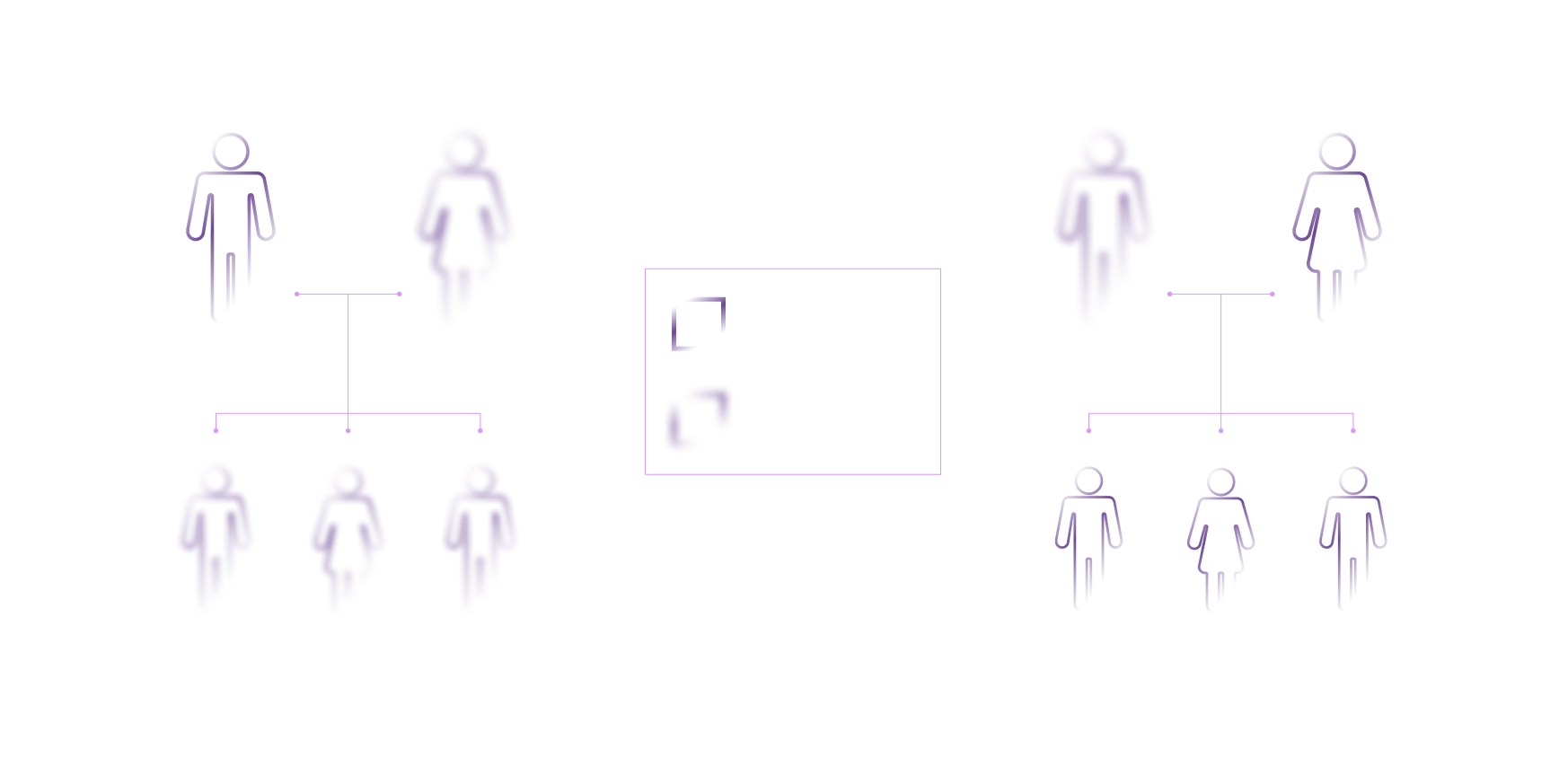
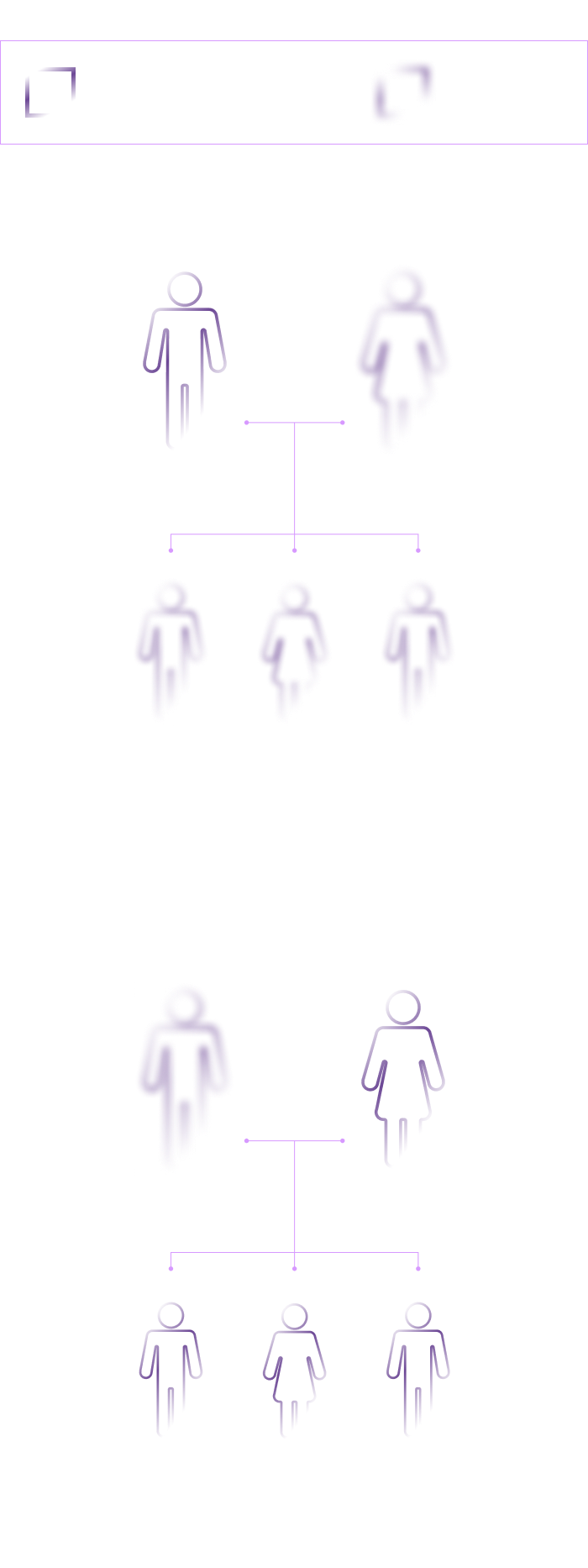
The mitochondria produce most of the energy that cells need to function.8 In LHON, these inherited mutations disrupt the mitochondria and cause cells in the optic nerve to stop working or eventually die.8
Mutations in one of the three major genes in mitochondria are responsible for LHON in more than 90% of patients.8 Other rare mitochondrial DNA mutations account for approximately 5% of the LHON cases.9 In the absence of maternally inherited LHON, mutations in a nuclear encoded gene, DNAJC30, have also been established, leading to an autosomal recessive mode of inheritance for LHON (arLHON).9
The genetic mutation in the mitochondria disrupts the normal functioning of the cells in the optic nerve called the retinal ganglion cells.10 The human eyes have over a million retinal ganglion cells.10 These cells process the visual information entering our eyes. They enable us to see things by sending the image to our brain.11
Although all the cells in the body have the same mitochondrial mutations, LHON damages the cells in the eye.12 The number of mitochondria in a cell depends on the energy demands of that particular cell, and retinal ganglion cells need a lot of energy.12 Genetic mutations in LHON make the retinal ganglion cells susceptible to mitochondrial diseases.12 LHON leads to progressive loss of the retinal ganglion cells, resulting in significant visual loss.10
Understanding the role of mitochondria in LHON
Mitochondria are organelles within a cell.10 They have their own set of DNA known as mitochondrial DNA.10,13 They are powerhouses that help convert the energy from food into energy the cell can use.10,13
LHON mutations
Many mutations have been identified in people with LHON. However, approximately 90% of patients affected by LHON have one of the three common mtDNA mutations (m.3460G>A in MT-ND1, m.11778G>A in MT-ND4, and m.14484T>C in MT-ND6).4 In the absence of maternally inherited LHON, mutations in a nuclear encoded gene DNAJC30 have also been established.9
The mutations responsible for LHON affect the generation of energy in the mitochondria.10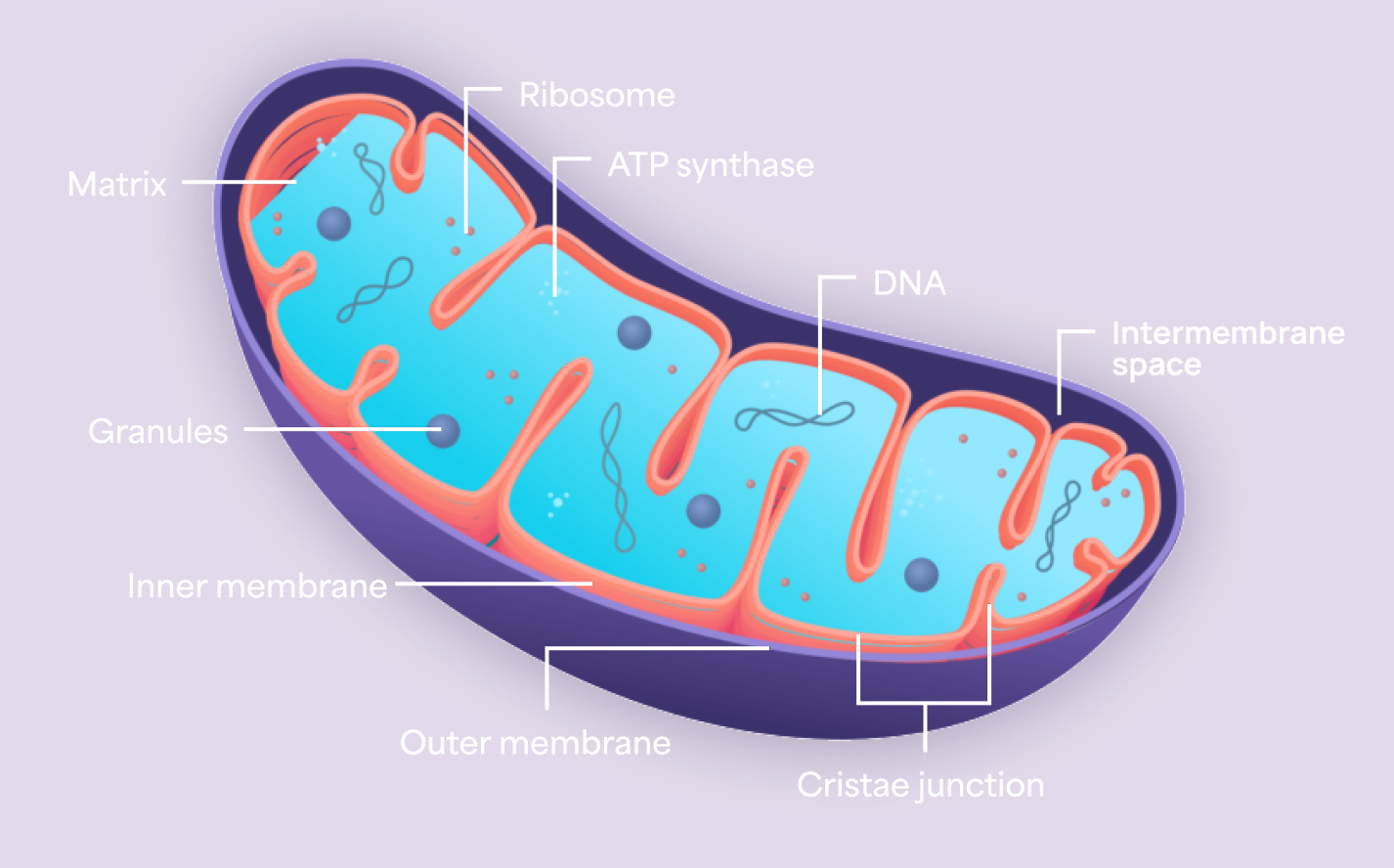
Potential risk factors and triggers

 Sebastian, Living with LHON

 Eliane, Living with LHON
If you are an LHON carrier, you will be advised of the following4

Do not smoke
Drink alcohol
moderately

Avoid binge-drinking
episodes



References:
- Theodorou-Kanakari A, et al. Adv Ther. 2018;35(10):1510-1518.
- Kirches E, et al. Curr Genomics. 2011;12(1):44-54.
- Carelli V, et al. European Ophthalmic Review. 2019;13(Suppl 2).
- Yu-Wai-Man P, et al. Leber Hereditary Optic Neuropathy. 2000. In: Adam MP, Bick S, Mirzaa GM, et al., eds. GeneReviews® [Internet]. Seattle (WA): University of Washington, Seattle; 1993-2025. Updated March 2021.
- Poincenot L, et al. Ophthalmology. 2020;127(5):679-688.
- Yu-Wai-Man P, et al. Prog Retin Eye Res. 2011;30(2):81-114.
- Kirkman MA, et al. Invest Ophthalmol Vis Sci. 2009;50(7):3112-3115.
- Fraser JA, et al. Surv Ophthalmol. 2010;55(4):299-334.
- Stenton SL, et al. J Clin Invest. 2021;131(6):e138267.
- Yu-Wai-Man P, et al. Hum Mol Genet. 2017;26(R1):R12-R20.
- Weinbar S, et al. Prog Retin Eye Res. 2018;67:102-117.
- Meyersen C, et al. Clin Ophthalmol. 2015;9:1165-1176.
- Newmeyer DD, et al. Cell. 2003;112(4):481-490.
- Mackey DA, et al. Am J Hum Genet. 2023;110(1):170-176.
- López Sánchez MIG, et al. Am J Hum Genet. 2021;108(11):2159-2170.
- Shah MP, et al. J Neuroophthalmol. 2024;44(4):e528-e529.
- Asanad S, et al. J Curr Ophthalmol. 2019;31(3):251-253.
- Sadun A, et al. Curr Treat Options Neurol. 2011;13(1):109-117.