
Diagnosing LHON


How is LHON diagnosed?
LHON is a clinical diagnosis and can be confirmed only through a genetic test that can identify the mutation. However, patients can often provide a history of vision loss in family members.1,2
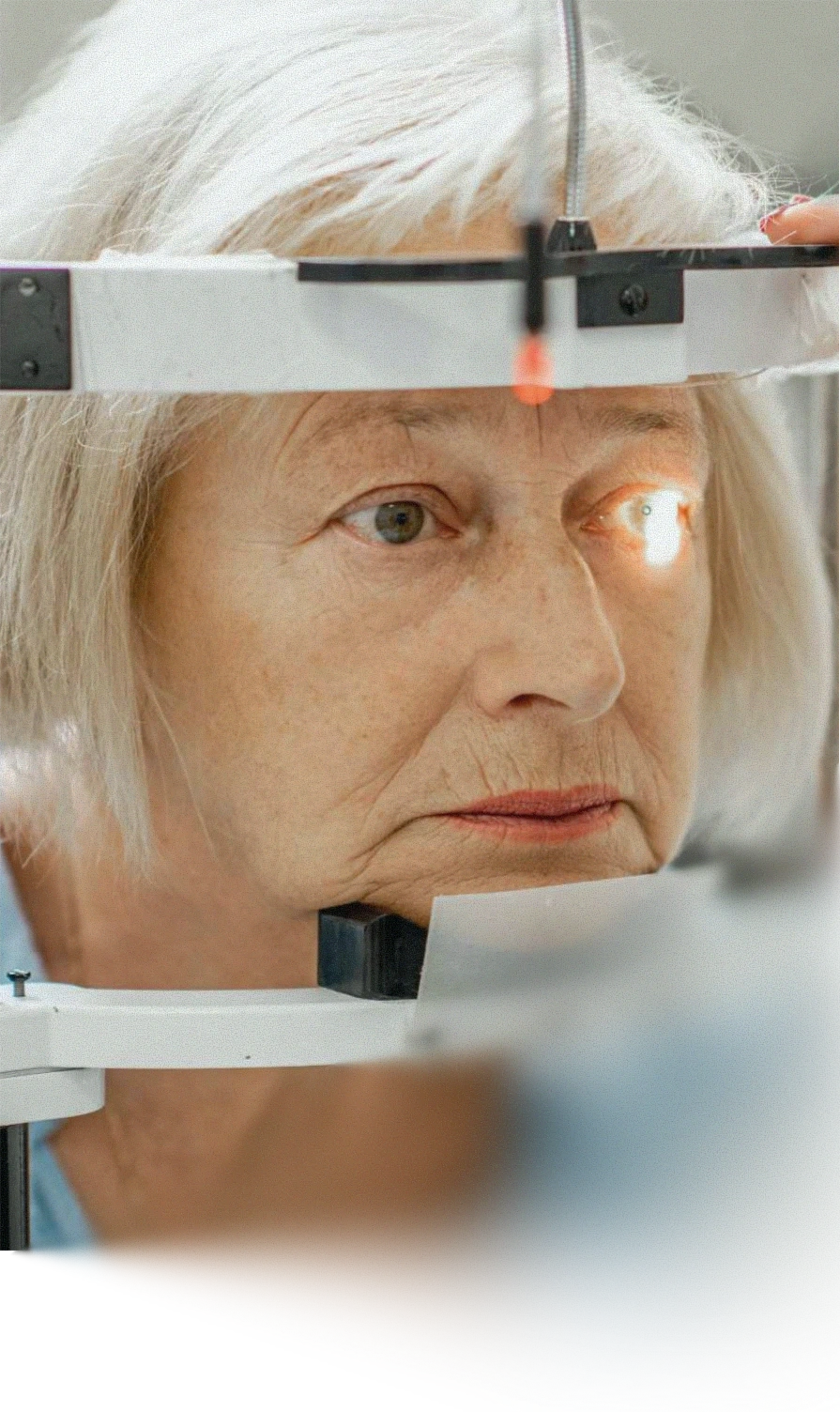
Some of the recommended tests for LHON diagnosis include1:
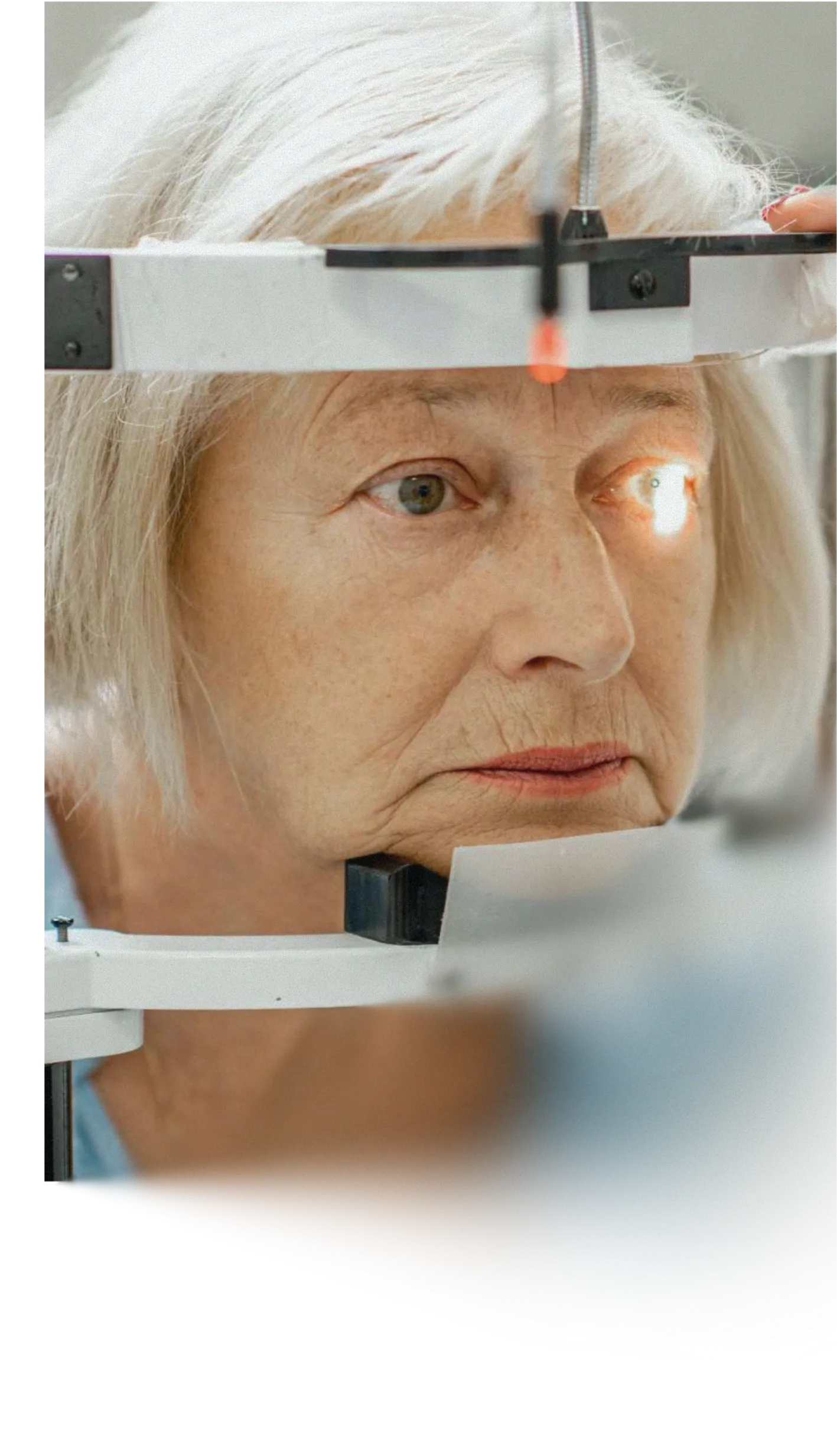
An eye examination1
An optical coherence tomography (OCT) scan to measure the retinal ganglion cells (RGCs) and retinal nerve fiber layer (RNFL) alterations2
A visual field test to measure the area of central vision loss3
A magnetic resonance imaging (MRI) or computed tomography (CT) scan to rule out inflammation in the eye and central nervous system lesions1,3
 Not an actual patient

Importance of early diagnosis
If you are experiencing problems with your eyesight, such as sudden blurring or clouding in the center of your vision, do not wait to see if it gets worse. The sooner a diagnosis is confirmed, the sooner a care plan can be initiated by your physician to help manage the condition medically, emotionally, and practically.4

Since LHON is a rare disease,
it’s often misdiagnosed, resulting
in diagnosis delays.
it’s often misdiagnosed, resulting
in diagnosis delays.
Who to talk to
Talk to your healthcare provider about your suspicions around LHON to speed up the diagnosis. Your provider can refer you to an eye care specialist for further management of your condition. If you have a confirmed LHON diagnosis, you can request to be seen by a neuro-ophthalmologist. They are specialists who understand LHON.
Take urgent action by visiting an ophthalmologist at the first signs of LHON



Genetic testing
Genetic counseling in LHON is difficult because nothing can predict if, when, or how severely it can affect a carrier.1 If the mother has one of the LHON mutations, all her children will inherit it.1 If you have a family history of LHON and you plan to become a mother, undergo genetic counseling to determine the genetic risk. Information from your genetic counseling can help you make your family planning decisions.
Find out if you have relatives in your family with vision loss


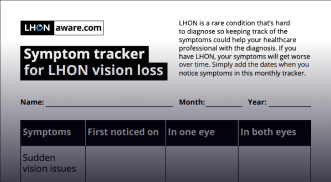
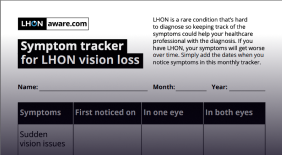
Symptom tracker
Keep track of how your symptoms are progressing.
Diagnosis challenge
Even the most experienced doctors may have never seen someone with LHON in their practice.5 People with LHON are often treated for other causes of vision loss first before being diagnosed with LHON.5
Preparing for a visit with your doctor
Doctors will look at a person’s medical history, symptoms, physical exam, and genetic test results to confirm a diagnosis.1




PAOLA, Living with LHON
References
- Yu-Wai-Man P, et al. Leber Hereditary Optic Neuropathy. 2000. In: Adam MP, Bick S, Mirzaa GM, et al., eds. GeneReviews® [Internet]. Seattle (WA): University of Washington, Seattle; 1993-2025. Updated March, 2021.
- Sadun A, et al. Curr Treat Options Neurol. 2011;13(1):109-117.
- Yu-Wai-Man P, et al. J Med Genet. 2002;39(3):162-169.
- Specialty Vision. Understanding Leber Hereditary Optic Neuropathy (LHON). Accessed November 13, 2025. https://specialty.vision/article/understanding-leber-hereditary-optic-neuropathy-lhon/
- Carelli V, et al. J Neuroophthalmol. 2017;37(4):371-381.
PP-RA-01632 02/2026